

A Story From Bogura
Karim Mia had a paddy field full of weeds. He was worried — weeds steal the food and water meant for rice. So he did what felt right: he poured double the herbicide into his sprayer tank, thinking “more medicine, faster cure.” He sprayed at noon, when the sun was strongest and the wind was blowing hard. Ten days later, the weeds were dead. But so were his rice plants in patches across the field. Leaves turned yellow. New shoots stopped coming. When harvest came, he got 13 maund of paddy from a field that should have given him 20.Karim’s medicine was not fake. The shop did not cheat him. The mistake was simple: too much medicine, at the wrong time of day, on a windy afternoon. This story repeats every season, in every district. The good news — it is completely avoidable, once you understand a few simple things.
What Is “Pre” and “Post” Emergence?
Think of weed seeds like small eggs hiding in the soil, waiting to hatch.
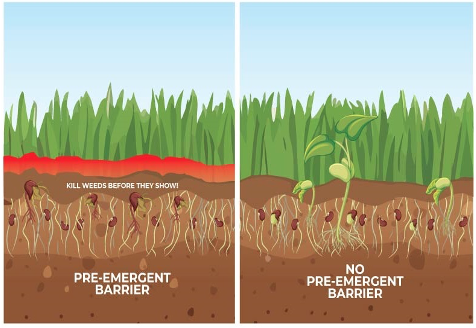
Pre-emergent herbicide is medicine you give beforethe eggs hatch — before the weed has come out ofthe soil. It works like a blanket laid over the field. Anyweed seed that tries to push through that blanket,diesbefore it ever sees sunlight. This medicine is sprayedright after sowing or transplanting, on bare or just-planted soil, before any green weed is visible.
Post-emergent herbicide is medicine you give after the weed has already hatched and grown leaves. This medicine works by touching the weed’s green leaves and traveling down into its roots to kill it. This is why post-emergent spray must be given when weeds are small and tender, with enough leaf to “drink” the medicine — not too young (no leaf yet) and not too old (the weed becomes hard and the medicine can’t enter properly).
Simple rule to remember:
1. No weed visible yet, soil just prepared → use pre-emergent.
2. Small green weeds already showing in the field → use post-emergent.
Using the wrong type at the wrong time is like giving a sleeping man medicine meant for someone already running — it does nothing, and you lose your money.
Timing: Why “When” Matters as Much as “What”
Even the right medicine fails if given at the wrong time. Rice, for example, has soft and sensitive stages — right after transplanting, and again during flowering. Spraying herbicide during these sensitive windows can hurt the rice itself, even if the herbicide is meant to be safe for rice.
Real-life fix: A vegetable farmer in Jashore used to spray “whenever he had free time” — sometimes many days after first seeing weeds. He started checking with his dealer: “Is my crop at the right stage today?” before spraying. His weeds died, and his crop stayed healthy, with no extra cost — just better timing.
Dosage: Why More Medicine Is Not a Faster Cure
This is the mistake that hurt Karim Mia the most. Imagine pouring water on a small plant — a little water helps it grow, but flooding it drowns the roots. Herbicide works the same way. The company tests and writes the exact correct amount on the label for a reason. Going above that amount does not kill weeds faster — it just pushes the medicine past the point your crop can safely handle, and the crop itself gets burned.
Real-life fix: Many farmers measure medicine “by eye” using an old bottle cap. A farmer in Pabna started using a proper small measuring cup instead, and followed the exact amount written for his bigha. His weeds died, his rice stayed green, and he spent the same money as before — just measured correctly.
Sprayer and Application: Why the Tool Matters Too
A good medicine, given at the right time and the right amount,can still fail if the sprayer itself is faulty. An old or damagednozzle can release more or less liquid than it should —meaning two farmers using the same medicine, the same dose, can get very different results.Wind is another silent enemy. Spraying on a windy, hot afternoon — like Karim Mia did — sends the medicine flying onto other crops instead of landing on the weeds, and wastes much of it in the air before it even reaches the ground.
Real-life fix: Spray early in the morning or late in the afternoon, when the air is calm and the sun is not harsh. Before the season starts, test your sprayer with plain water over a small measured patch of land to see how much water comes out — if your dealer or field officer can help you do this once, you will know exactly how to mix correctly all season.
The Mistake to Always Avoid
The single biggest danger is repeating the exact same medicine, at the same field, season after season, without a break. Just like weeds that survive a strong rain become stronger next time, weeds that survive the same medicine repeatedly become harder to kill over the years — until one day, the medicine that always worked suddenly stops working. This is already happening with certain weeds in rice fields across the country.
Real-life fix: Change to a different type of herbicide every season or two, instead of using the same one out of habit. If a patch of weeds in your field seems unusually hard to kill even with the right dose, tell your dealer right away — don’t simply spray more.
The Bottom Line
A herbicide is not a magic water that kills more the more you pour. It is a precise medicine — right type, right time, right amount, right tool, with a season’s rest from repeating the same one. Karim Mia did not lose his harvest because the medicine was bad. He lost it because three small mistakes — wrong amount, wrong hour, no sprayer check — stacked on top of each other.
The fix costs nothing extra. Just a few minutes of care: ask your dealer which type you need, measure properly, spray in the cool hours, and change your medicine type from season to season.
If you are ever unsure which medicine your field needs, or how much, talk to your nearest dealer or our field representative before you spray. A short question today is always cheaper than a damaged harvest tomorrow.